Dice have been used in games for thousands of years, and they remain an important part of modern casino gaming. From traditional craps tables to simpler dice-based games, casinos use dice to create outcomes based on probability and clearly defined rules. Understanding how these games work can make it easier to understand concepts such as odds, house edge, payouts, and randomness.
This guide explains casino dice games, their common rules, different formats, and the mathematical principles behind them. It is intended for general information and does not encourage gambling.
Casino dice games are games that use one or more physical or digital dice to determine game outcomes. Dice normally have numbered faces, with each face having a specific probability of appearing when the die is fair.
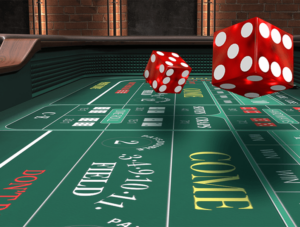
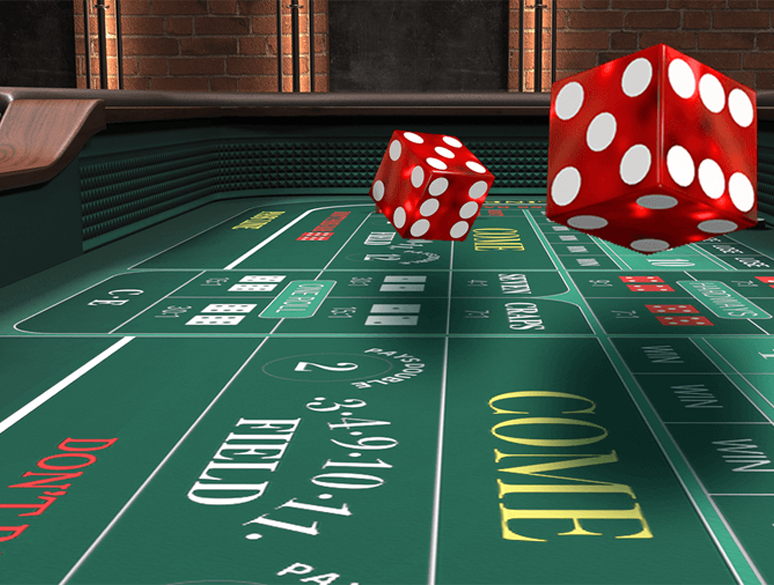
The most familiar example is craps, which uses two six-sided dice. Players may make different types of bets based on the total shown by the dice or what happens during a sequence of rolls.
Other casino dice games can be much simpler. Some involve predicting whether a particular number will appear, while others use dice to create combinations that determine payouts.
The main idea behind these games is randomness. Each roll is intended to produce an independent outcome, meaning the previous result does not normally determine the next result.
To understand how do casino dice games work, it helps to start with the basic mathematics of a standard six-sided die.
A fair die has six possible results:
Each individual number has a probability of approximately 1 in 6, or 16.67%, of appearing on a single roll.
When two dice are used, there are 36 possible combinations. However, the totals are not equally likely.
For example, a total of 7 can be produced in six different ways:
A total of 2 can only be produced by 1 + 1.
This difference is extremely important when understanding casino dice game odds. Although every individual dice combination has the same probability with fair dice, different totals can have different probabilities.
The exact casino dice games rules depend on the particular game. However, most dice games have several basic components:
The dice
The game uses physical dice, electronic dice, or a computerized random number generator that produces dice-like results.
The betting options
Different games provide different possible outcomes. A player may be predicting a number, a combination, or the result of a sequence.
The winning conditions
The rules specify which results qualify as wins, losses, or other outcomes.
Payouts
Each type of outcome can have a specific payout. The payout structure is important because probability and payout are connected to the mathematical house advantage.
The house edge
The casino dice game house edge represents the mathematical advantage built into a particular wager over a large number of theoretical results.
It is important to understand that house edge is a long-term mathematical concept. It does not mean that every individual game will produce a predictable result.
There are several types of casino dice games, ranging from classic table games to modern electronic formats.
Craps
Craps is one of the best-known dice games in casinos. It normally uses two six-sided dice and has a structured sequence of rolls.
The game includes several different betting categories, each with its own probability and payout characteristics. Some wagers depend on the initial roll, while others remain relevant through subsequent rolls.
Because craps contains many betting options, its rules can appear complicated to beginners. The important point is that each wager has its own mathematical characteristics.
Sic Bo
Sic Bo is another well-known dice game, particularly common in Asian casinos. It generally uses three dice.
Players make predictions about the results produced by the three dice. Depending on the version, wagers can relate to individual numbers, combinations, totals, or broader categories.
Sic Bo demonstrates why understanding probability is important. Some outcomes are much less likely than others, and payouts generally reflect those differences.
Chuck-a-Luck
Chuck-a-Luck is a traditional dice game involving three dice. It is sometimes known as a birdcage game because traditional versions use a cage-like device to shake the dice.
The basic concept involves predicting whether a particular number will appear among the three dice. The possible payout can depend on whether the chosen number appears once, twice, or three times.
Hazard
Hazard is an older dice game with historical connections to modern craps. It uses two dice and has a more complex set of rules involving different numbers and stages.
Although it is less common in modern casinos than craps, it is useful when studying the history of dice gambling.
Electronic Dice Games
Modern casinos may also offer electronic versions of dice games. Instead of physical dice, a digital system generates the results.
These games can use software-based random number generation. The interface may look different from a traditional table, but the underlying concept remains the same: predefined probabilities determine possible outcomes.
Casino dice game odds describe how likely particular results are to occur.
With one fair six-sided die, every number has a probability of 1/6.
With two dice, the probability distribution changes. Seven is the most common total because it has six possible combinations. The totals 2 and 12 are the least common because each has only one combination.
A simplified distribution for two dice looks like this:
| Total | Number of combinations |
| 2 | 1 |
| 3 | 2 |
| 4 | 3 |
| 5 | 4 |
| 6 | 5 |
| 7 | 6 |
| 8 | 5 |
| 9 | 4 |
| 10 | 3 |
| 11 | 2 |
| 12 | 1 |
There are 36 possible combinations in total.
This explains why a bet associated with a total of 7 can have a different probability from a bet associated with a total of 2.
The casino dice game house edge is a mathematical measure used to describe the casino’s theoretical advantage on a particular wager.
For example, suppose a hypothetical wager has an expected return of 97 units for every 100 units wagered over a very large number of trials. Its theoretical house edge would be 3%.
This does not mean a player will necessarily lose 3% during a short session. Random variation can produce very different individual results.
The house edge also differs between wagers. One dice game may contain several betting options, and each option can have its own probability and payout.
This is why simply saying that a game has a particular house edge without identifying the wager can be misleading.

Randomness is central to dice games in casinos.
With a physical die, factors such as the initial position, throwing motion, bounce, and surface interaction influence the final result. Casino equipment is designed to make outcomes difficult to predict and to maintain consistent game conditions.
Digital dice games use another approach. A computer system can use a random number generator to determine results.
In either format, players should not assume that a previous result determines the next one.
For example, if a six appears several times in a row, that does not automatically mean another number is “due.” Each new roll has its own probability distribution.
When asking what are the different casino dice games, it is useful to divide them into several categories.
Traditional table games:
These include games such as craps, where physical dice are rolled on a casino table.
Three-dice games:
Sic Bo and Chuck-a-Luck use three dice and have their own probability structures.
Historical games:
Games such as Hazard demonstrate how dice gaming developed over time.
Electronic games:
Digital casino systems can simulate dice results without using physical dice.
Although these games all use dice, their rules, payouts, and mathematical characteristics can be very different.
People searching for how to play casino dice games should first understand that every game has its own rule set.
A useful way to study a dice game is to examine:
How many dice are used.
How the dice results are generated.
What possible outcomes exist.
Which outcomes are considered wins or losses.
How payouts are calculated.
What the probability of each outcome is.
What the house edge is for each wager.
Learning these elements provides a better understanding of the game than simply memorizing betting names.
For informational purposes, it can also be useful to study dice probabilities without placing real-money wagers. Probability exercises can demonstrate how frequently different combinations theoretically occur.
Probability is the foundation of most casino dice games.
Consider two six-sided dice. There are 36 possible ordered combinations. Because six combinations produce a total of 7, the probability of rolling 7 is 6/36, or approximately 16.67%.
By comparison, only one combination produces 2, giving it a probability of 1/36, or approximately 2.78%.
These differences allow casinos to establish different payouts for different outcomes.
The relationship can be summarized simply:
Probability + payout structure = mathematical expectation
A less likely outcome generally needs a higher payout to make the wager attractive, but the payout does not necessarily compensate fully for the probability. The difference contributes to the casino’s mathematical advantage.
Several myths can make dice games confusing.
Myth 1: A number becomes “due”
If a certain number has not appeared recently, that does not mean it must appear next.
Myth 2: Previous rolls control future rolls
With properly functioning independent dice rolls, previous results do not determine the next result.
Myth 3: A lucky dice technique changes probability
Changing the way a person throws or interacts with dice does not provide a reliable mathematical advantage under normal casino conditions.
Myth 4: A large payout means a better wager
A large potential payout can be associated with a low-probability outcome. The size of the payout alone does not determine whether a wager has favorable mathematics.
Myth 5: Random means every outcome is equally likely
Randomness does not mean every total has the same probability. Two dice, for example, produce some totals more frequently than others.
Physical and digital dice can look very different, but both are designed to generate unpredictable outcomes.
Physical dice are affected by their movement and interaction with the table. Casinos use standardized equipment and procedures to reduce opportunities for manipulation.
Digital dice use software to generate results. Their operation depends on the underlying random number generation system and the rules of the game.
For users researching casino dice games rules, it is therefore important to check whether they are studying a physical table game or an electronic version. The visual appearance may be similar, but the technical process can differ.
Understanding the rules is more important than memorizing betting names.
A person researching dice games should know what an outcome means before interpreting its probability or payout. This is particularly important with games containing many different wagers.
Understanding the rules can also help distinguish between:
These distinctions are useful when studying casino mathematics generally.
Casino games involve financial risk, and outcomes cannot be guaranteed. Dice games are especially dependent on random results, so no method can reliably predict individual rolls.
Anyone researching gambling should understand the relevant laws and age restrictions where they live. People who are not legally permitted to gamble should not participate in real-money casino games.
For educational purposes, dice probability can be studied using mathematical examples, simulations, or free classroom exercises without real-money gambling.
Casino dice games combine simple physical objects with probability, rules, and mathematical payout systems. Craps, Sic Bo, Chuck-a-Luck, Hazard, and electronic dice games all demonstrate different ways casinos can use dice to create random outcomes.
The most important concepts are the rules, probability, payouts, and casino dice game house edge. Two dice do not produce every total with equal frequency, and a higher payout does not automatically mean a more favorable mathematical outcome.
Understanding how do casino dice games work starts with learning how dice combinations are formed and how probabilities are calculated. From there, players and researchers can better understand why different wagers have different odds and why casinos maintain a mathematical advantage.
Ultimately, dice games are examples of applied probability. Studying them can provide useful insight into randomness and statistics, regardless of whether someone ever participates in casino gambling.