

BK8 positions itself as one of the most trusted online casinos in Asia, offering a comprehensive platform that includes sports betting, live dealer tables, and an immense selection of slot games. The site is highly tailored for the Cambodian market,


Cambodia’s payment system is changing quickly. There is a mix of cash (US dollars and Cambodian riel), bank cards, mobile wallets, a national QR standard (KHQR), and the central Bakong rails. This system is becoming more and more digital.
QR codes and mobile payments are quickly becoming popular with city dwellers and businesses, but cash is still necessary for many routine transactions outside of big cities.

Cash remains a widely accepted form of payment across markets, tuk-tuks, street vendors, and rural villages in Cambodia. In the Cambodian economy, US dollars (USD) are commonly used for larger purchases, while Cambodian riel (KHR) is typically used for smaller transactions or as change. It is common for merchants to price goods and services in USD but return change in riel, a practice that has become a convenient standard across the country.
For travelers and small businesses alike, carrying a mix of USD and riel is highly practical. Having small denominations of each currency ensures smooth transactions, whether paying for local food, transportation, or daily necessities. In addition, many street vendors and smaller shops may not have sufficient change, making it helpful to carry exact amounts when possible.
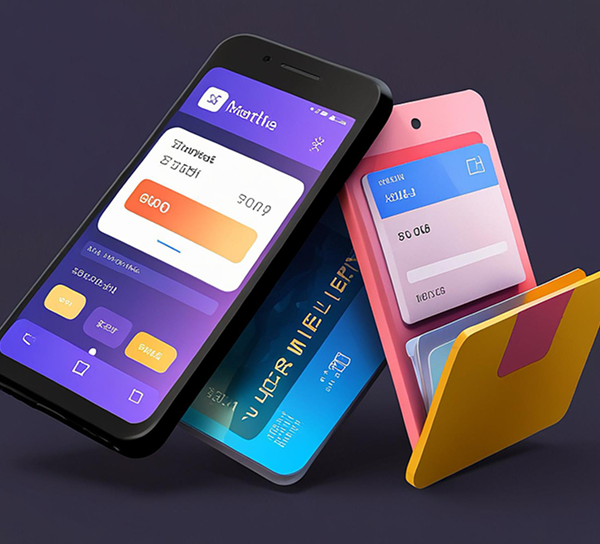
Mobile wallets have become a cornerstone of digital payments in Cambodia, transforming how consumers and small businesses manage money in 2026. Leading services such as ABA Pay / ABA Mobile, Wing Money, Pi Pay, TrueMoney, and the Bakong wallet provide a wide range of functionalities, allowing users to pay bills, top up mobile phones, transfer funds peer-to-peer (P2P), and scan QR codes at participating merchants.
For example, in early 2025, Srey, a small café owner in Phnom Penh, started using Wing Money to accept payments from customers. Instead of handling large amounts of cash, she could receive instant transfers directly to her mobile wallet and link it to her local bank account. This reduced the risks of carrying cash, simplified bookkeeping, and made transactions faster for both her and her customers.
Mobile wallets are also convenient for daily users. A student in Siem Reap, for instance, might use ABA Mobile to pay for electricity, top up their phone, and split restaurant bills with friends—all without visiting a bank or carrying cash. QR code payments at street vendors, cafés, and even taxis have become increasingly common, enabling smooth and contactless transactions, which became particularly popular in late 2025 and early 2026 following the rise of digital-first payment habits.
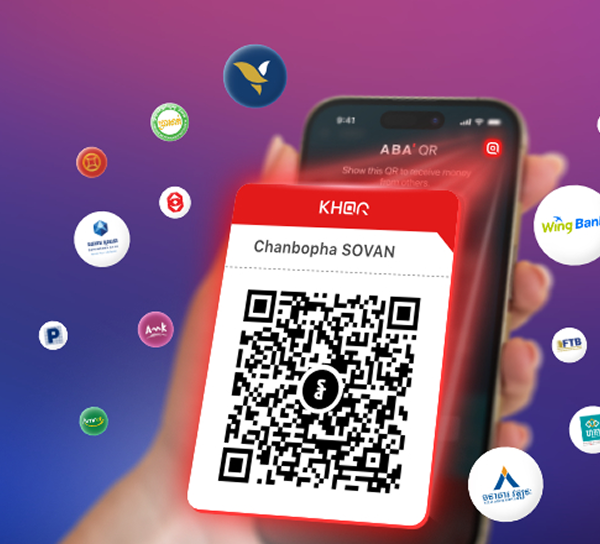
In 2022, the National Bank of Cambodia came out with KHQR, a single QR standard that enables retailers to show one code that works with payments from banks and e-wallets that are part of the system. KHQR makes checkout easier and has led to a big increase in QR transactions.
Digital QR payments now make up a significant part of both retail and P2P payments. Integrating KHQR into a business makes it easier for customers and cuts down on the number of QR stickers needed at the point of sale.
Learn more about ABA payment and crypto payment

The National Bank of Cambodia started Bakong, a payment system that lets banks lend each other money and lets people send money instantly. It also supports wallet interoperability and KHQR.
Bakong helps make financial inclusion happen by letting people and companies send money between banks and wallets in real time for free. Some banks offer apps that work with Bakong or work with the system to move money right away.
In Cambodia’s fast-growing digital marketplace, payment gateways play a crucial role in connecting businesses with customers. Local gateways such as iPay88, PayWay by ABA, and other trusted partners act as secure bridges between online stores, banks, and e-wallet systems. These gateways allow merchants to accept Visa, Mastercard, UnionPay, and local options like ABA Pay Cambodia, Wing, and Truemoney Cambodia, making online shopping more convenient for both local and international buyers.
A well-chosen payment gateway can determine the success of an e-commerce business. It directly impacts checkout conversion rates, transaction fees, supported payment methods, and settlement speed—all of which influence customer satisfaction and trust.
For instance, PayWay by ABA is popular among Cambodian merchants because it integrates smoothly with websites and

mobile apps, offers quick settlement, and supports multiple currencies. Similarly, iPay88 provides advanced fraud prevention tools and multi-channel payment options, helping online businesses manage risk while maintaining a seamless checkout process.
Who uses what — typical scenarios
Offering multiple options (cash + QR + card) increases sales and accessibility for most
The payment methods in Cambodia now form a pragmatic mix: cash for broad reach, cards for tourists and larger purchases, mobile wallets and KHQR for fast everyday urban payments, and payment gateways for businesses selling online.
For most users and merchants, the best approach is to support multiple methods—this improves convenience, trust and sales while preparing for a steadily more digital future.
Learn more about: True money payment and Wing payment.