
When people visit an online or land-based casino, they often wonder how casinos consistently make profits while still paying out millions in winnings every day. The answer lies in one simple concept: house edge.
Understanding the house edge Cambodia players encounter is essential if you want to make smarter gambling decisions. Whether you enjoy slots, blackjack, baccarat, roulette, or poker, every casino game has a mathematical advantage built into it that favors the casino over the long run.
This guide explains what is house edge, how it works, why casinos rely on it, how it compares with RTP (Return to Player), and which games offer the best odds for players.
Many new players ask, what is house edge?
The house edge is the mathematical advantage that a casino has over players in every casino game. It represents the percentage of every wager that the casino expects to keep over thousands or even millions of bets.
Simply put:
For example:
This doesn’t mean you’ll lose exactly that amount during one gaming session. Luck still determines short-term results, but over time, statistics favor the casino.
For anyone interested in house edge Cambodia, understanding this principle is the first step toward responsible gambling.
Many players ask, what is the house edge in casinos and why every game has one.
Casinos cannot survive by relying on luck. Instead, every legitimate casino game is designed using mathematical probabilities.
The house edge ensures that:
Without the house edge, casinos would eventually lose money and could not continue operating.
A simple house edge explained example makes the concept easier to understand.
Imagine you play a game where:
If the game has a 2% house edge:
Of course, individual results vary.
One player may win $500.
Another may lose $300.
However, after millions of bets, the casino’s average profit closely matches the published house edge.
Many beginners wonder, how does the house edge work?
The answer lies in probability.
Every casino game offers possible outcomes.
The payout odds are intentionally set slightly below the true mathematical odds.
For example:
Suppose the true odds of winning should pay:
Instead, the casino pays:
That tiny difference becomes the casino’s long-term profit.
This principle applies across:
The longer people play, the closer actual results move toward the expected house edge.
Casinos do not win because they cheat.
Instead, they rely on three key factors:
House Edge
Every game includes a built-in mathematical advantage.
High Volume
Thousands of players wager every day.
Millions of bets produce predictable long-term profits.
Time
The longer players continue gambling, the closer outcomes align with mathematical expectations.
Even when casinos experience large jackpot payouts, their long-term revenue remains positive because of the house edge.

One of the most common questions is house edge vs RTP.
Although they are closely related, they are not identical.
| House Edge | RTP (Return to Player) |
| Casino advantage | Player return percentage |
| Lower is better | Higher is better |
| Represents expected casino profit | Represents expected player payout |
| Expressed as a percentage | Expressed as a percentage |
Formula:
House Edge = 100% − RTP
Examples:
| RTP | House Edge |
| 99% | 1% |
| 98% | 2% |
| 97% | 3% |
| 96% | 4% |
| 95% | 5% |
Understanding house edge vs return to player (RTP) helps players compare casino games more effectively.
Let’s explore house edge vs return to player (RTP) using a practical example.
Imagine a slot machine advertises:
This means:
Therefore:
Higher RTP usually means lower house edge.
Many players ask how to calculate house edge.
The simplest formula is:
House Edge = 100% − RTP
Example:
Game RTP = 97.4%
House Edge:
100 − 97.4 = 2.6%
You can also calculate expected loss:
Expected Loss = Total Wager × House Edge
Example:
Total wagers:
$500
House edge:
2%
Expected loss:
$500 × 2%
= $10
Again, this represents long-term averages rather than guaranteed outcomes.
Knowing the lowest house edge casino games helps players maximize entertainment value.
Here are some of the best choices.
1. Blackjack
Average House Edge:
0.5%
With perfect basic strategy, blackjack offers one of the best odds in any casino.
2. Baccarat
Banker Bet:
Approximately 1.06%
Player Bet:
Approximately 1.24%
Avoid the Tie bet because it has a much higher house edge.
3. Video Poker
Certain versions:
Around 0.5%
Correct strategy is important.
4. Craps
Pass Line Bet:
Approximately 1.41%
Odds bets have no additional house edge.
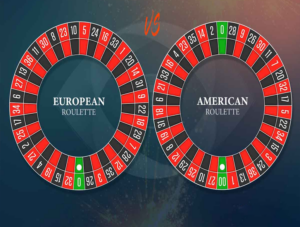
5. European Roulette
House Edge:
2.70%
Thanks to the single zero wheel.
These are among the lowest house edge casino games available worldwide.
Players should also know the highest house edge casino games before placing bets.
Keno
House Edge:
20–40%
One of the worst games for long-term returns.
Casino War
House Edge:
Around 2.9–18%
Depending on betting options.
Big Six Wheel
House Edge:
Up to 24%
Popular for entertainment but poor value.
Sic Bo
Certain side bets:
Over 30%
Main bets are generally much better.
Slot Machines
Many slots:
2–10%
Some can exceed 15%.
Always check the RTP if available.
| Game | Average House Edge |
| Blackjack | 0.5% |
| Baccarat (Banker) | 1.06% |
| Baccarat (Player) | 1.24% |
| Craps | 1.41% |
| European Roulette | 2.70% |
| American Roulette | 5.26% |
| Slots | 2–10% |
| Sic Bo | 2.8–30% |
| Keno | 20–40% |
Not necessarily.
A lower house edge simply means:
Luck still determines short-term results.
Someone can lose quickly in blackjack or win a large jackpot on a slot machine despite the higher house edge.
Probability only becomes reliable after a very large number of bets.
For players searching for house edge Cambodia, the same mathematical principles apply whether you play online or at licensed casinos abroad.
Before playing:
Understanding house edge Cambodia allows players to make informed decisions rather than relying solely on luck.
While no player can eliminate the house edge, there are several ways to minimize its effect.
Choose Games with Low House Edge
Blackjack, baccarat, and European roulette generally provide better value.
Learn Basic Strategy
Blackjack strategy charts significantly reduce the casino’s advantage.
Avoid High-Edge Side Bets
Many bonus wagers have much worse odds than the main game.
Check RTP Before Playing
Higher RTP usually means lower house edge.
Manage Your Bankroll
Set spending limits before playing and stick to them.
Take Advantage of Bonuses
Casino promotions can increase your playing time, although it’s important to read the wagering requirements.
Myth 1: Casinos Control Individual Results
False.
Licensed casinos use certified Random Number Generators or regulated gaming equipment to ensure each outcome is independent.
Myth 2: A Machine Is “Due” to Pay
False.
Every spin is random.
Previous outcomes do not affect future results.
Myth 3: A Low House Edge Guarantees Profit
False.
Even games with a 0.5% house edge can produce losing sessions.
The house edge only predicts long-term averages.
Myth 4: RTP Is Guaranteed Every Session
False.
RTP is calculated over millions of game rounds.
Individual sessions can vary dramatically.
What is house edge?
The house edge is the mathematical percentage advantage a casino has over players in every casino game.
What is the house edge in casinos?
It is the built-in statistical advantage that allows casinos to remain profitable over the long term while still paying winners.
How does the house edge work?
It works by paying players slightly less than the true mathematical odds, creating a predictable long-term profit for the casino.
How to calculate house edge?
Subtract the RTP from 100%.
Example:
96% RTP = 4% house edge.
House edge vs RTP: Which is better?
Players should look for:
Both describe the same concept from different perspectives.
Which games have the lowest house edge?
Blackjack, baccarat, video poker, craps, and European roulette generally offer the lowest house edge.
Which games have the highest house edge?
Keno, Big Six Wheel, certain Sic Bo bets, and some slot machines typically have the highest house edge.
Understanding the house edge Cambodia players encounter is one of the most valuable lessons in casino gaming. Rather than being a hidden fee, the house edge is a mathematical principle that enables casinos to operate profitably while offering fair games and exciting payouts.
Whether you’re learning what is house edge, exploring house edge explained, comparing house edge vs RTP, or researching how to calculate house edge, the key takeaway is simple: lower house edge games generally provide better long-term value. Choosing games such as blackjack, baccarat, or European roulette, understanding RTP, and practicing sound bankroll management can help you enjoy longer and make more informed decisions.
Ultimately, while no strategy can overcome the house edge entirely, knowledge is your greatest advantage. By understanding how does the house edge work and recognizing the differences between the lowest house edge casino games and the highest house edge casino games, you can approach casino gaming with realistic expectations and a more responsible mindset.