Slot machines are popular casino games because their rules are usually simple to understand. Players choose their bet, spin the reels, and check the symbols that appear. However, one important feature can sometimes be confusing for beginners: the payline.
Understanding a payline in a slot machine helps explain how a game identifies winning symbol combinations. Some slots use traditional horizontal lines, while others include diagonal patterns, zigzag shapes, or hundreds of possible ways to form a winning combination. Each game may follow a different set of rules.
If you are new to slot games, learning about paylines can make the game instructions easier to understand. It can also help you compare different slot formats and recognize the difference between paylines, reels, symbols, and winning combinations.
This guide explains what a payline is, how paylines work in slot machines, the differences between fixed and adjustable paylines, and how modern games use alternative winning systems. It also covers common misconceptions and important points to check before playing.
A payline in a slot machine is a predefined pattern across the reels that determines which symbol combinations can qualify for a win.
A traditional slot machine usually has several vertical reels containing different symbols. When the reels stop, the game checks the symbols against its rules. If the symbols form a qualifying combination along an active payline, the game may award a payout according to the paytable.
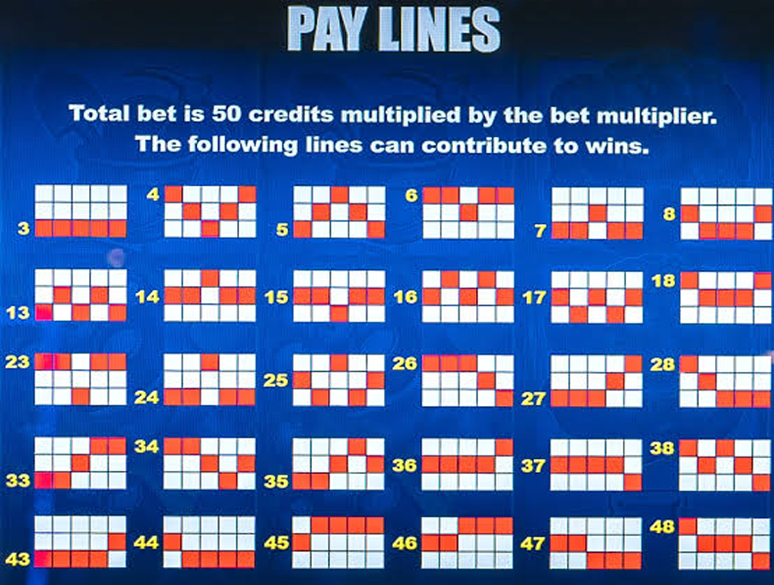
For example, imagine a slot machine with five reels and three visible symbol positions on each reel. One payline might run horizontally across the middle row. Another might travel diagonally from the upper-left position to the lower-right position.
The symbols must match the game’s winning rules and appear in the required positions for a combination to qualify.
A payline does not guarantee a win. It simply identifies a pattern that the game checks when determining whether a winning combination has occurred.
What Does Payline Mean in Slots?
When people ask, “what does payline mean in slots?” they are asking how the game determines which symbol arrangements count as winning patterns.
In a traditional slot game, a payline may connect symbols from left to right across several reels. If the required symbols appear in the correct sequence, the combination may qualify for a payout.
However, not every slot uses the same system. Some games evaluate paylines from left to right, while others allow wins in both directions. Certain games use special rules for wild symbols, scatter symbols, or other features.
The game’s paytable explains which combinations count, how many matching symbols are required, and what payout each combination may provide.
Understanding how paylines work in slot machines becomes easier when you break the process into a few basic steps.
Step 1: Choose a Slot Game
Different slot machines have different reel layouts and winning systems. A traditional game might have three reels, while a modern video slot commonly has five reels and several visible rows.
Before playing, check the game’s information screen to understand its structure and rules.
Step 2: Check the Available Paylines
The game may display the number of paylines available. For example, a slot might have 10, 20, or 25 paylines, while another might offer 50 or more.
These numbers describe the patterns that the game checks, not the number of wins a player will receive.
Some games allow players to select how many paylines to activate. Others automatically use all available paylines.
Step 3: Review the Paytable
The paytable shows which symbol combinations qualify for payouts. It may include ordinary symbols, wild symbols, scatter symbols, and special bonus symbols.
For example, a game might award different payouts for three, four, or five matching symbols along a qualifying line. The actual amounts and requirements depend on the individual game.
Step 4: The Reels Stop
When a spin finishes, symbols appear in the visible reel positions. The game evaluates the result according to its programmed rules.
If the symbols form a qualifying combination along an active payline, the game calculates the payout using the applicable paytable and bet rules.
Step 5: The Game Displays the Result
The game may highlight a winning line, animate the matching symbols, or display the payout on the screen.
If no qualifying combination appears, the spin does not produce a payline win. Special features may still have separate rules, depending on the game.
It is important to understand that slot outcomes are generally generated using a random number generator (RNG). Previous spins do not make a particular payline more likely to win on the next spin.
Not all slot machine paylines follow a straight horizontal pattern. Modern games use different designs to create varied winning possibilities.
Horizontal Paylines
A horizontal payline runs across the same row on each reel.
For example, a line might connect the middle position of reel one to the middle position of reels two, three, four, and five.
This is one of the easiest payline formats to understand because the pattern remains in a straight line.
Diagonal Paylines
Diagonal paylines connect positions at different heights across neighboring reels.
A line might begin near the top of the first reel, move through the middle of the second reel, and finish near the bottom of the fifth reel.
These patterns allow qualifying combinations to appear in positions other than a single horizontal row.
Zigzag Paylines
Zigzag paylines move up and down across the reels. For instance, a line could start in the middle row, move to the top row, return to the middle, and then move to the bottom.
The exact pattern depends on the game. A symbol combination must follow the designated route to qualify as a win on that line.
Multiple Fixed Paylines
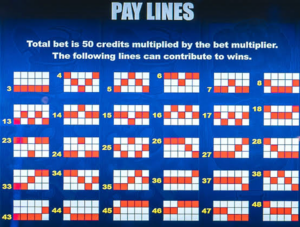
Some games offer many predefined lines simultaneously. A five-reel game might contain 20, 25, or 50 fixed paylines.
Each line has a specific path through the reel positions. More paylines can create more possible patterns for the game to evaluate, but they do not guarantee a winning result.
Cluster-Pay and Other Alternative Systems
Some modern slots do not use traditional paylines at all. Instead, they may award wins when a certain number of matching symbols appear next to one another or form a qualifying cluster.
Other games use ways-to-win systems, where matching symbols in designated reel positions can qualify without following one specific line.
These alternatives are important because a slot with many winning possibilities does not necessarily have traditional paylines.
One common difference between slot games is whether the player can change the number of active paylines.
Understanding fixed paylines vs adjustable paylines helps explain how the game handles its winning patterns and betting options.
What Are Fixed Paylines?
Fixed paylines are predefined lines that remain active according to the game’s rules. Players generally cannot switch individual lines on or off.
For example, a slot machine with 25 fixed paylines evaluates all 25 lines on each eligible spin.
The total bet may depend on the selected bet per line, the total stake, or another betting structure specified by the game.
Advantages of fixed paylines:
Things to consider:
What Are Adjustable Paylines?
Adjustable paylines allow players to choose how many lines are active, within the options provided by the game.
For example, a slot might allow players to select 5, 10, or 20 paylines rather than requiring all 20 lines to be active.
The available choices depend on the specific game.
Advantages of adjustable paylines:
Things to consider:
Fixed vs Adjustable Paylines: Key Differences
| Feature | Fixed paylines | Adjustable paylines |
| Number of active lines | Set by the game’s rules | Selected from available options |
| Player control | Usually limited | Greater flexibility |
| Betting structure | Depends on the game’s rules | May vary with active line count |
| Winning patterns | Evaluated on designated lines | Only eligible active lines are evaluated |
| Guaranteed wins | No | No |
Neither system is automatically better. The important factors are the game’s rules, its paytable, the total cost of a spin, and the player’s understanding of the mechanics.
Slot machine winning combinations are arrangements of symbols that satisfy a game’s payout rules.
Paylines help determine where those arrangements must appear in traditional line-based slots.
Matching Symbols
Many traditional slots award payouts when matching symbols appear along a qualifying payline.
For example, a hypothetical game might pay for three matching fruit symbols across the first three reels. Four or five matching symbols might qualify for a different payout.
The exact requirements depend on the paytable. Not every group of matching symbols creates a win.
Wild Symbols
A wild symbol can substitute for certain ordinary symbols to help form a qualifying combination.
For example, if a game permits wild substitutions, a wild symbol might complete a line containing two matching ordinary symbols.
However, wild symbols do not necessarily substitute for every symbol. Some games exclude scatter symbols or special bonus symbols from substitution.
Always check the game’s rules before assuming a wild symbol completes a particular combination.
Scatter Symbols
Scatter symbols typically follow rules that differ from standard paylines. Some games award a payout when a specified number of scatters appears anywhere on the reels, regardless of whether they form a traditional line.
Scatter symbols may also activate free-spin rounds or other features.
Their exact function varies by game, so they should not automatically be treated like ordinary payline symbols.
Bonus Symbols
Bonus symbols can trigger additional game features when specific conditions are met. These might include bonus rounds, pick-and-win games, or other interactive features.
A bonus trigger is not necessarily a payline win. The game may use separate rules to determine when the feature becomes available.
Understanding these distinctions helps players read the paytable without confusing ordinary symbol matches with special features.
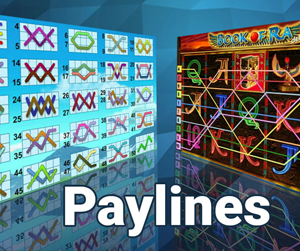
The difference between ways to win slots vs paylines is particularly important when comparing traditional slot machines with newer video slots.
Both systems evaluate symbol arrangements, but they define qualifying combinations differently.
How Payline Slots Work
In a payline-based slot, symbols must follow a designated pattern. The pattern might be horizontal, diagonal, or zigzag.
If a game has 20 paylines, it evaluates the eligible symbol arrangements on those 20 patterns, according to its rules.
The number of paylines does not directly tell you the probability of winning or the expected return.
How Ways-to-Win Slots Work
Ways-to-win slots usually evaluate matching symbols across adjacent reels, often starting with the leftmost reel. The symbols can appear in different vertical positions rather than following one fixed line.
For example, a five-reel slot might use a system that allows matching symbols in any of three positions on each reel, provided the required symbols appear across consecutive reels.
Some games describe this structure as 243 ways to win because three available positions across five reels can produce (3^5 = 243) positional arrangements. This example illustrates the structure; actual winning conditions vary by game.
A game may also use a different number of rows or apply special rules that change which combinations qualify.
Main Differences
| Feature | Payline slots | Ways-to-win slots |
| Winning pattern | Predefined line | Matching symbols in eligible reel positions |
| Symbol positions | Must follow the designated line | Can appear in different positions |
| Number displayed | Number of paylines | Number of possible ways |
| Game rules | Line-based evaluation | Reel-position-based evaluation |
| Guaranteed payout | No | No |
A game advertising hundreds of ways to win is not necessarily more rewarding than one with 20 paylines. The number describes the structure of possible winning arrangements, not the likelihood or value of a payout on its own.
Learning how to read paylines on a slot machine is easier when you start with the game’s information screen rather than trying to memorize every pattern.
Follow these steps to understand the layout.
First, identify the reels and rows. Count the vertical reels and the visible symbol positions on each reel. This helps you understand the possible paths through the game.
Second, open the paytable. Look for a payline diagram, line numbers, or a screen showing the patterns. Some games let you highlight each line to see its route.
Third, check the direction of wins. Many traditional slots count combinations from left to right, but some support wins in both directions or have other special rules.
Fourth, check the minimum matching symbols. A game may require three matching symbols for a particular payout, while another may award something for two matching symbols under certain conditions.
Fifth, review the bet information. Determine whether the displayed bet is per line, per spin, or the total stake. This distinction is essential when comparing games.
Finally, check special-symbol rules. Wilds, scatters, bonus symbols, and expanding symbols may operate differently from ordinary payline symbols.
Taking time to read these details gives you a clearer understanding of how the game evaluates a spin.
A common misconception is that a slot with more paylines is automatically more likely to produce a profitable result.
The relationship is more complicated.
When additional paylines are active, the game can evaluate more designated patterns. Depending on the game’s design and the stake, this may create more opportunities for a line to qualify for a payout on a particular spin.
However, activating more paylines can also increase the total cost of the spin. A spin that produces a small payout might still return less than the amount wagered.
For example, imagine a hypothetical game in which activating additional lines increases the total stake from $1 to $2. A payout of $1 would cover the original $1 stake but would not cover the $2 stake.
This simplified example shows why the number of winning lines alone does not determine whether a spin produces a net gain.
The game’s return to player (RTP), volatility, paytable, betting structure, and rules all matter. RTP is a theoretical long-term measure, not a promise about the outcome of an individual spin or a short session.
Slot games that use RNGs are designed to produce random outcomes. Previous losses, unused paylines, and long periods without a win do not guarantee that a winning combination is due.
New players may misunderstand paylines because different slot games use different terminology and layouts.
Here are several common mistakes to recognize.
Assuming Every Matching Symbol Is a Win
Matching symbols do not always create a payout. They must meet the game’s requirements, including symbol sequence, reel position, and any minimum matching-symbol count.
Confusing Paylines With Reels
Reels are the vertical sections that display symbols. Paylines are the patterns that connect symbol positions across those reels.
A five-reel slot does not necessarily have five paylines. It may have one, 20, 50, or another number of designated lines.
Ignoring the Total Bet
Some players focus on the bet per line without checking the total amount charged for a spin.
Always check the final stake displayed by the game before starting a spin. Fixed-payline games may have different betting requirements from adjustable-payline games.
Believing More Lines Guarantee Better Results
More active paylines do not guarantee a payout, a profit, or a better short-term result.
The number of lines is only one feature of the game and should not be treated as a reliable prediction of future outcomes.
Confusing Scatter Wins With Payline Wins
Scatter symbols may pay or activate features without following a standard payline. Check the rules to understand which conditions apply.
Forgetting That Different Slots Have Different Rules
Two games can display similar reels but use completely different payout structures. Never assume that a rule from one slot applies to another.
What is a payline in slots?
A payline is a predefined pattern across the reels that determines whether a particular symbol arrangement qualifies for a payout. Some slots use straight lines, while others use diagonal or zigzag patterns.
How many paylines does a slot machine have?
The number varies by game. Some traditional slots have one or a few paylines, while video slots may have 10, 20, 25, 50, or more. Some modern games use ways-to-win or cluster systems instead of traditional paylines.
Are fixed paylines better than adjustable paylines?
Neither format is automatically better. Fixed paylines simplify line selection, while adjustable paylines offer more control over the number of active lines. The total stake and payout rules matter more than the label alone.
Can a slot machine pay without paylines?
Yes. Ways-to-win slots, cluster-pay slots, and other alternative formats can award payouts without traditional paylines. Each game explains its winning conditions in its own rules.
Do more paylines increase the chance of winning?
More active lines may allow more patterns to qualify for a payout, depending on the game. However, they can also increase the total stake. They do not guarantee a win or improve the profitability of an individual spin.
Where can I find a slot machine’s payline information?
Check the paytable, help menu, or game information screen. These sections typically explain the number of paylines, winning combinations, symbol values, and special features.
A payline in a slot machine is a predefined pattern that helps the game determine which symbol arrangements qualify for payouts. Traditional slots may use horizontal, diagonal, or zigzag lines, while modern games can use fixed paylines, adjustable paylines, ways-to-win systems, or cluster-based mechanics.
Understanding the difference between these formats makes slot-game rules easier to follow. It also helps you distinguish paylines from reels, recognize winning combinations, and understand how special symbols work.
The most important step is to read the paytable before playing. Check the active paylines, the total stake, the symbol requirements, and any special rules. Remember that more paylines do not guarantee better results and that random slot outcomes cannot be predicted from previous spins.
This knowledge provides a clearer understanding of slot-machine mechanics without confusing the number of possible winning patterns with the likelihood of making a profit.