When people play slot machines, they often look for patterns that might suggest which game could be more likely to pay. One of the most common ideas is that some machines are hot slots, while others are cold slots. A hot machine is believed to be one that has recently paid several wins, while a cold machine is thought to be one that has not paid much for a long time.
But are hot and cold slots real? Can a player identify a machine that is “due” for a win? Or are these ideas simply slot machine myths created by players trying to find patterns in random results?
Understanding how modern slot machines work makes the answer much clearer. While players can certainly experience winning and losing streaks, the idea that a machine becomes “hot” or “cold” in a way that changes its future results is generally not how properly functioning random-number-based slot games operate.
This guide explains what are hot and cold slots, how they work, why players believe in them, and what you should actually consider when evaluating a slot game.
Before looking at whether the concept is real, it helps to understand the basic definitions.
What Does a Hot Slot Mean?
A hot slot is a slot machine that appears to be paying frequently or has recently produced noticeable wins. Players may call a machine “hot” after seeing someone win a large amount or after personally receiving several winning combinations.
For example, imagine a player watches a slot machine produce several wins within a short period. They may assume that the machine is hot and that it could continue paying.
Another player might move to that machine because they believe its recent activity indicates that it is in a favorable state.
However, recent wins do not automatically mean that the next spin has a greater chance of winning.
Cold slots are generally described as machines that have not produced many wins recently. A player may sit at a machine for several spins without receiving a meaningful payout and conclude that it is cold.
Some players believe a cold machine has been losing for so long that it must eventually produce a large win.
This is where an important misunderstanding appears. A long losing streak does not necessarily make the next spin more likely to win.
The short answer is that hot and cold slots are not normally different categories of machines with predictable future behavior.
In modern regulated slot games, results are generally determined by a random number generator, commonly called an RNG. The RNG is designed to generate results independently rather than remember whether the previous spins were winners or losers.
That means a machine does not normally think:
These are human interpretations rather than reliable characteristics of the game.
Therefore, when people ask are hot and cold slots real, the better answer is that hot and cold may describe what players observe, but they do not necessarily represent a change in the underlying probability of future spins.
To understand are hot and cold slots a myth, you first need to understand the basic mechanics of slot games.
A modern slot machine uses software to determine the outcome of each spin. In many games, an RNG produces random values that are then used to determine the symbols displayed on the reels.
The important point is that each spin is generally treated as a separate event.
Suppose a slot has just produced a large payout. The next spin does not automatically become less likely to win because of that previous result.
Likewise, if a player has lost 20 consecutive spins, the next spin does not automatically become more likely to win simply because the machine has been “cold.”
This principle is one of the most important things to understand about how slot machines work.
Random results do not always look evenly distributed in the short term.
A genuinely random sequence can contain:
To a human observer, these patterns can look meaningful.
For example, a player might see five wins within ten spins and conclude that the machine is hot. Another player might experience 30 losing spins and believe the machine is cold.
But random sequences can naturally contain clusters and gaps.
This is why observing a short-term pattern does not necessarily provide useful information about what will happen next.
The belief in hot and cold slot machines has existed for many years. Several psychological factors help explain why.
Humans Look for Patterns
People naturally search for patterns in uncertain situations.
If a player sees a machine produce several wins, it is easy to connect those results and create a story around them.
The same thing happens after a long losing streak. The player may feel that the machine must eventually change.
However, seeing a pattern does not prove that the pattern has predictive value.
The Gambler’s Fallacy
The gambler’s fallacy is the belief that a random event is “due” to produce a different result because of previous outcomes.
For example:
“This machine has not paid for a long time, so it must be ready to win.”
That reasoning can be misleading when the outcomes are independent.
A coin that lands heads several times does not become obligated to land tails on the next flip. Similarly, a slot machine does not necessarily become more likely to produce a winning result because of previous losses.
Selective Memory
Players often remember unusual events better than ordinary ones.
Someone may remember sitting down at a machine and hitting a significant payout shortly after another player described it as hot.
They may not remember the many other times when following a “hot” machine produced nothing unusual.
This can strengthen the belief that hot and cold patterns are meaningful.
The practical difference is mainly how players describe recent performance, not necessarily how the machine’s underlying probability works.
| Feature | Hot Slots | Cold Slots |
| Common meaning | Recent frequent or noticeable wins | Recent lack of noticeable wins |
| Player perception | Machine seems active or lucky | Machine seems inactive or unlucky |
| Based on | Recent observations | Recent losing results |
| Predicts the next spin? | No reliable guarantee | No reliable guarantee |
| Connected to RNG? | Results are still determined by the game’s system | Results are still determined by the game’s system |
| Common misconception | “It will keep winning” | “It must be due for a win” |
This distinction is important because players sometimes treat the labels as if they describe two different types of slot machines.
They generally do not.
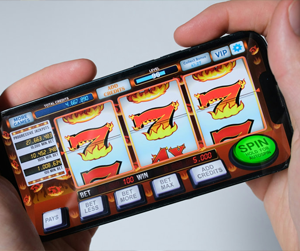
The phrase are hot and cold slots a myth deserves a nuanced answer.
The observation that a machine can experience periods where players see more wins is not necessarily imaginary. Short-term results can naturally form winning and losing streaks.
The myth is the assumption that these streaks reliably tell you what will happen next.
For example, a slot may produce several wins in a short period. That does not mean its future spins have become permanently more favorable.
Likewise, a slot may experience a long period without a major payout. That does not mean a large payout is guaranteed to follow.
In other words, “hot” and “cold” can be useful informal descriptions of recent activity, but they should not be treated as a reliable prediction system.
Do Cold Slots Become Due for a Win?
One of the most common beliefs about cold slots is that a machine eventually has to pay after enough losing spins.
This is not a safe assumption.
If the game uses independent random outcomes, previous losses do not create a debt that the machine has to repay.
Consider a simplified example. Suppose a particular event has a certain probability on every independent spin. Losing several times does not automatically increase that probability on the next spin.
The same idea applies to slots.
A player may get lucky immediately after a long losing streak, but that does not prove that the losing streak caused the win.
The timing can simply be random.
The opposite belief is that a machine producing several wins will continue to do so.
Again, there is no reliable reason to assume that.
A winning streak can end on the next spin. A machine that has just produced a large payout does not necessarily have to continue paying.
This is especially important when players increase their bets because they believe they have discovered a hot machine.
Recent results alone are not a dependable method for determining whether increasing a wager is sensible.
If you want to evaluate a slot more rationally, it is more useful to understand concepts such as RTP, volatility, paylines, bonus features, and game rules.
RTP means “return to player.” It is a theoretical long-term percentage used to describe the expected return of a game over a very large number of plays.
For example, a slot with a theoretical RTP of 96% is designed around a long-term mathematical model in which approximately $96 would be returned for every $100 wagered over an extremely large number of spins.
That does not mean a player who deposits $100 will receive exactly $96 back.
Short-term results can be dramatically different.
A player could win, lose, or experience a result far above or below the theoretical RTP during a short session.
This is another reason why watching a machine for a few minutes does not tell you whether it is genuinely “hot.”
Volatility Matters Too
Volatility, sometimes called variance, describes how a slot’s payouts tend to be distributed.
A higher-volatility slot may produce less frequent wins but potentially larger individual payouts. A lower-volatility game may provide more frequent smaller wins.
This can affect how a slot feels during play.
For example, a player may interpret frequent small wins as evidence that a machine is hot. Another player may prefer a game with less frequent but potentially larger payouts.
Neither situation proves that the machine has entered a special hot or cold state.
Understanding volatility gives players a more useful way to compare games than relying on recent winning streaks.
Rather than trying to identify hot and cold slot machines, players can focus on objective information about the game.
Check the Game Information
Look at the game’s published information where available. Depending on the game and jurisdiction, this may include:
These details provide more useful information than simply watching which machine has recently paid.
Different slots can operate very differently.
Some have bonus rounds, free-spin features, multipliers, wild symbols, or progressive jackpots. Understanding these mechanics can help players know what they are actually playing.
Set a Budget
No strategy can remove the financial risk associated with gambling.
If an adult chooses to gamble where it is legal, a sensible approach is to establish a spending limit before playing and avoid treating gambling as a guaranteed way to make money.
A budget should be money the player can afford to lose.
Do Not Chase Losses
Believing that a cold slot is “due” can encourage players to continue spending after losses.
This can turn a simple losing session into a much larger one.
The same problem can occur when someone believes a hot machine will continue paying and increases their spending because of recent wins.
Both approaches rely heavily on assumptions about random outcomes.
Hot and cold slots are only one example of common gambling myths.
Other popular beliefs include:
“A machine that just paid a jackpot cannot pay another one soon.”
There is no general rule that prevents another significant win from occurring simply because a jackpot was recently awarded.
“A machine that has not paid all day must be ready.”
A lack of recent wins does not automatically create a guaranteed future payout.
“Changing machines changes the odds.”
Moving to another game changes the game you are playing, but simply changing seats does not create a special advantage.
“Betting more makes a win more likely.”
The relationship between bet size and winning probability depends on the game’s rules. Increasing a wager should not be confused with creating a guaranteed advantage.
So, are hot and cold slots real?
They are real as player descriptions of recent results, but they should not be treated as reliable states that predict future outcomes.
A machine can certainly appear hot because several winning results happen close together. It can also appear cold because players experience a long series of losses.
But random systems can naturally produce streaks.
The key mistake is assuming that the past results have created a predictable future pattern.
Understanding this difference can help players avoid one of the most common slot machine myths.
The debate over hot slots, cold slots, and are hot and cold slots real has existed for a long time. The idea is easy to understand: a hot machine seems to be paying, while a cold machine seems to be withholding wins.
However, the recent history of a properly functioning RNG-based slot does not normally provide a reliable indication of what its next spin will produce.
If you have ever wondered what does a hot slot mean, the simplest explanation is that it is a player-created label for a machine or game that appears to be producing frequent or noticeable wins. A cold slot is the opposite.
The more important lesson is to understand how slot machines work. Random outcomes can create winning streaks and losing streaks without those streaks becoming predictable systems.
Instead of trying to identify a “due” machine or chase a machine that appears hot, focus on understanding the game’s rules, RTP, volatility, features, and your own spending limits.
Ultimately, hot and cold slot machines are better understood as descriptions of short-term experience rather than dependable strategies for predicting future results.